
[Q&A] Powell: "Uncertainty is high... We must wait for clear data" [Fed Watch]
공유하기
- Chairman Jerome Powell emphasized that economic uncertainty has increased and stated that a cautious approach will be maintained until real economic data becomes clearer.
- The current monetary policy is in a state of moderate tightening, and he conveyed that they are prepared to respond appropriately to changes in the situation.
- Powell noted the impact of tariff policies and economic uncertainty, adding that the necessity of policy adjustments will be carefully evaluated.
- The article was summarized using an artificial intelligence-based language model.
- Due to the nature of the technology, key content in the text may be excluded or different from the facts.
Press Conference Immediately After FOMC on the 7th (Local Time)
"Wait and see" was mentioned the most
Amid increasing economic uncertainty
Indicating a cautious approach until the impact on real data appears
'Wait and see'
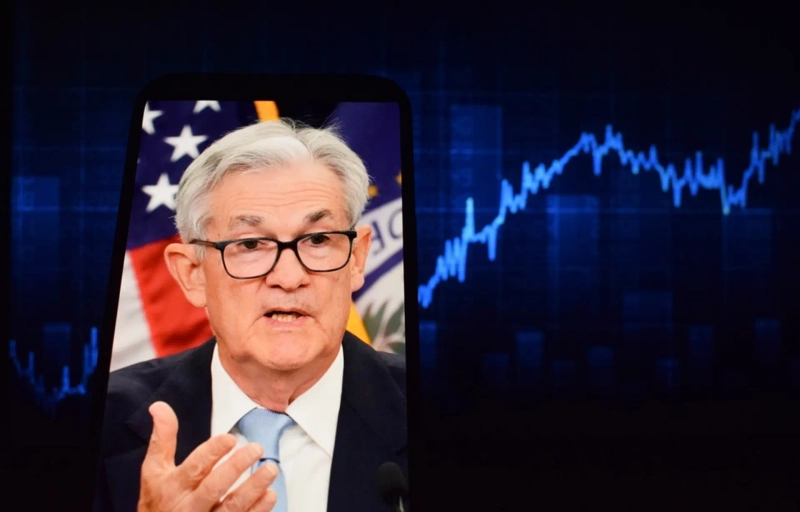
This is what Jerome Powell, Chairman of the U.S. Federal Reserve (Fed), mentioned the most during a press conference immediately after the Federal Open Market Committee (FOMC) on the 7th (local time). It expresses the point that the direction of monetary policy cannot be hastily changed amid increasing economic uncertainty due to U.S. President Donald Trump's tariff policy. Although consumer and business investment sentiment is shrinking, the judgment that it is too early to adjust monetary policy is also reflected because real economic data is still solid. The following is the Q&A.
▶Which of the two mandates, employment and price stability, should be addressed more urgently?
"We have assessed that the risks to both employment growth and price increases have increased. This means it has risen compared to March. However, it is difficult to say how this situation will unfold. For example, there is considerable uncertainty about how the tariff policy will settle and what impact it will have on the economy, growth, and employment if it does. It is too early to make a judgment at this point. Therefore, we believe that the current level of the benchmark interest rate is appropriate, and we think we can maintain the rate at its current level while waiting for additional clarity on tariffs."
▶Will it take time to take action (monetary policy) based on data?
"From the current point of view, even if we remove the distorted figures of the first quarter GDP (temporary increase in imports due to tariffs), the economy is still showing solid growth, and the labor market also appears robust. Inflation is slightly above 2%, and overall, the economy is resilient and in good condition. The current monetary policy is moderately tight, and it is 100bp less tight than last fall. Therefore, we see no need to rush and will patiently watch the data. Data may change quickly or slowly, but for now, we believe waiting for the situation to become clearer is the appropriate response."
▶What factors could lead to future price increases?
"We view the current underlying inflation trend as favorable. This is because quite good figures are coming out in both residential and non-residential services. However, there are still many unknowns, so we need to watch with patience. The economy is maintaining its resilience, and our policy position is in an appropriate place. We judge that the cost of watching the situation further is not high. Also, the current administration is negotiating tariffs with several countries, and as time goes by, the outline of the tariff policy will become clear. Accordingly, the economic impact will also become more apparent."
▶When you said 'there is no need to rush,' does that mean you are not ruling out the possibility of a rate cut at the next meeting?
"We are satisfied with the current policy stance. We believe we are in a position to respond appropriately to changes in the future situation. At present, I think it is a time for patience. Of course, if the situation changes rapidly, we have the ability to move quickly. But for now, I think it is most appropriate to observe. Companies and market participants are all watching the situation unfold, and accordingly, they will be able to make better judgments."
▶Do you still believe a soft landing is possible?
"Considering the scale and scope of the tariffs, the risks of rising inflation and unemployment have certainly increased. If the tariffs are actually imposed at the levels currently being discussed, progress toward achieving our goals (price stability and maximum employment) could be delayed. We will not give up on achieving the goals themselves, but it means that progress may slow over the next year. However, all of this depends on how the tariffs are actually implemented, and there is great uncertainty in terms of scale, scope, timing, and persistence."
▶Can you take preemptive action?
"The rate cut in 2019 can be seen as a preemptive measure. However, the action last fall was not preemptive but rather somewhat late. At that time, the economy was slowing, and inflation was 1.6%, so it was an environment where we could move preemptively. It is different now. Inflation is still above the target, and there are many predictions of upward pressure in the future. Many forecasting agencies are predicting an increase in inflation. Of course, some expect an economic slowdown or recession. We cannot be sure what action is appropriate until we see more data."
▶How much weakening of the labor market does the Fed need to see to consider a cut?
"The current unemployment rate is 4.2%, and the labor force participation rate is good, and wages are well adjusted. We look at the entire employment indicators comprehensively, not just the unemployment rate figure, but also the rate of change and various detailed data. To determine whether the labor market is actually deteriorating, we consider all those factors. If the two goals of employment and inflation conflict, it will be a very complex and difficult decision."
▶Does the Fed believe it should cut rates this year?
"That depends on how the situation unfolds. The reason the Fed maintains its current stance is that we need to watch a little more how the situation develops. In some cases, a rate cut this year may be appropriate, but in other cases, it may not be. The judgment will vary depending on how the tariffs settle and what impact they have on employment and inflation. It is not a time when we can confidently say what the appropriate response path is."
▶Did President Trump's public urging for a rate cut affect today's decision or your duties?
"It does not affect us at all. We always act according to the same principles. The Fed's mission is to achieve maximum employment and price stability, and we perform that goal for the benefit of the entire American public. We make decisions based solely on economic data, outlook, and risk balance, without political considerations. That's all there is to it."
▶Considering the complexity of the first quarter GDP, what is your intuition about the fundamental flow of the economy?
"My intuition is that the uncertainty about the future path of the economy is extremely high, and the downside risks have increased. As stated in the statement, the risks of rising inflation and rising unemployment have increased. However, it has not yet been reflected in the actual figures. The risks have not materialized in the data. So I think this point is more important than my intuition."
▶The recent Fed Beige Book showed a rather negative atmosphere. It mentioned that layoffs have begun in some industries, prices are rising, and investment decisions are being delayed. Isn't this a sign of a slowdown?
"It could be. But it has not yet clearly appeared in the economic indicators. We also carefully read and analyze soft data and various field opinions. It is true that many companies and households feel anxious and are holding off on economic decisions. Such signs have not yet appeared clearly. However, consumption is still solid. Credit card usage continues, and consumer spending is in a healthy state. It is true that the sentiment of people and companies is quite negative."
New York = Shin-Young Park, Correspondent nyusos@hankyung.com

![[New York Stock Market Briefing] Closed lower on AI concerns… Broadcom plunged in the 5% range](https://media.bloomingbit.io/PROD/news/b07399a5-fad3-4406-971e-042ab70ad61d.webp?w=250)