
U.S. appeals court: "Tariffs illegal"…Trump: "All tariffs are still in effect"
공유하기
- A U.S. federal appeals court has ruled that the Trump administration's signature tariff policy is mostly illegal.
- The ruling invalidated reciprocal tariffs based on IEEPA, but said some measures, such as base tariffs and product tariffs, remain in place.
- The administration said it plans to expand tariffs using other legal authorities, such as national security-based tariffs, irrespective of this ruling.
- The article was summarized using an artificial intelligence-based language model.
- Due to the nature of the technology, key content in the text may be excluded or different from the facts.
Appeals court ruling that halts Trump's tariff policy
Points to IEEPA authority abuse…Constitution assigns taxation authority to Congress
Base tariffs invalidated…product tariffs maintained
A U.S. federal appeals court ruled late on the 29th (local time) that most of the Trump administration's signature economic policy of tariffs was illegal. However, the U.S. government's imposition of tariffs will not be immediately halted. The federal appeals court ordered that tariffs remain in place until October 14 to allow the administration to appeal to the Supreme Court.
The federal appeals court upheld the lower court's decision in a 7-4 ruling. The decision shakes a core part of President Trump's economic policy. The majority opinion said the president acted beyond the authority granted by the International Emergency Economic Powers Act (IEEPA), enacted in 1977.
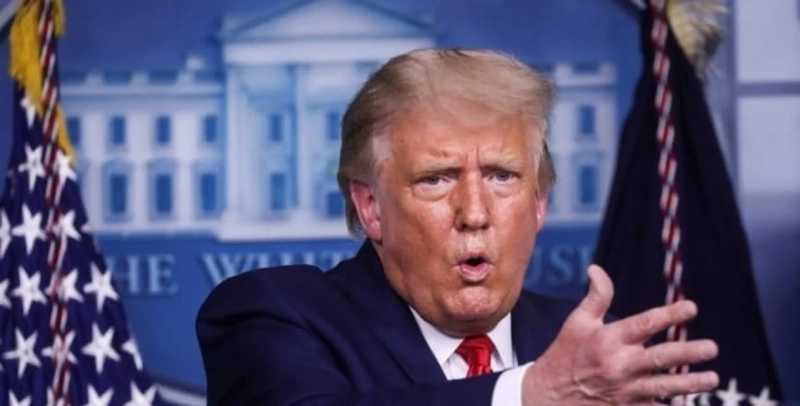
U.S. President Donald Trump posted on Truth Social, "All tariffs are still in effect! Today, a very partisan appeals court wrongly said our tariffs must be eliminated. But they also know that, in the end, America will win," he asserted.
President Trump imposed "reciprocal tariffs" last April. This led to days of market turmoil and strong backlash from foreign governments. In response, President Trump temporarily suspended enforcement of the tariffs to negotiate with dozens of countries. The revised tariff rates took effect in early August, and negotiations with many countries are ongoing.
According to estimates by the Tax Foundation, these reciprocal tariffs account for about 70% of projected tariff revenue for 2026. The administration, however, plans to expand tariffs under other legal authorities that are not affected by this ruling.
The tariff invalidation in this ruling includes the uniform 10% base tariff imposed on all countries. It also covers higher tariffs on countries the U.S. government deems "malign actors" in trade, and additional tariffs on Canada, China, and Mexico.
Even if the Supreme Court upholds the ruling, not all tariffs from a second Trump term would disappear. Separate from the reciprocal tariffs, President Trump has already imposed tariffs on industries such as autos, steel, aluminum, and copper based on separate national security authorities. Those tariffs are not affected by this ruling, and the administration plans to expand them in the coming months. They also serve as a "backstop" in case the IEEPA-based tariffs are ultimately invalidated.
In the majority opinion (unsigned), the court said, "IEEPA grants the president broad authority to respond to declared national emergencies, but it does not explicitly authorize the imposition or taxation of measures such as tariffs or tariff duties." The court pointed out that nowhere in the statute do synonyms like "tariffs" or "taxes" appear.
The court also said, "If Congress intends to delegate tariff-imposing authority to the president, it must do so explicitly," adding, "This is not surprising given that the Constitution vests the core authority to impose taxes, like tariffs, exclusively in the legislature."
The ruling stems from the government's appeal of a May 28 decision by the U.S. Court of International Trade (USCIT), which ordered the repeal of the reciprocal tariffs the president implemented under IEEPA on the grounds that Congress has the exclusive authority to impose tariffs.
Earlier, on April 2, President Trump declared a national emergency, arguing that a chronic large trade deficit posed a major threat to national security and the economy, and announced he would impose country-specific reciprocal tariffs under IEEPA.
Subsequently, five small and medium-sized businesses that said they were harmed by the tariffs filed a lawsuit against the U.S. government in the Court of International Trade on April 14, and on April 23 twelve states, including Oregon, joined the lawsuit.
New York = Park Shin-young, correspondent nyusos@hankyung.com

![[New York Stock Market Briefing] Closed lower on AI concerns… Broadcom plunged in the 5% range](https://media.bloomingbit.io/PROD/news/b07399a5-fad3-4406-971e-042ab70ad61d.webp?w=250)