
KOSPI trapped in a trading range… Eyes on U.S. employment data [Weekly Outlook]
공유하기
- The KOSPI has been unable to find additional upward momentum within the trading range, and investors remain in a wait-and-see stance.
- This week, employment and inflation data that could affect the U.S. policy rate and domestic policy momentum are attracting attention.
- Researcher Lee Kyung-min suggested that if the KOSPI falls below 3100, it may be worth increasing equity allocation.
- The article was summarized using an artificial intelligence-based language model.
- Due to the nature of the technology, key content in the text may be excluded or different from the facts.
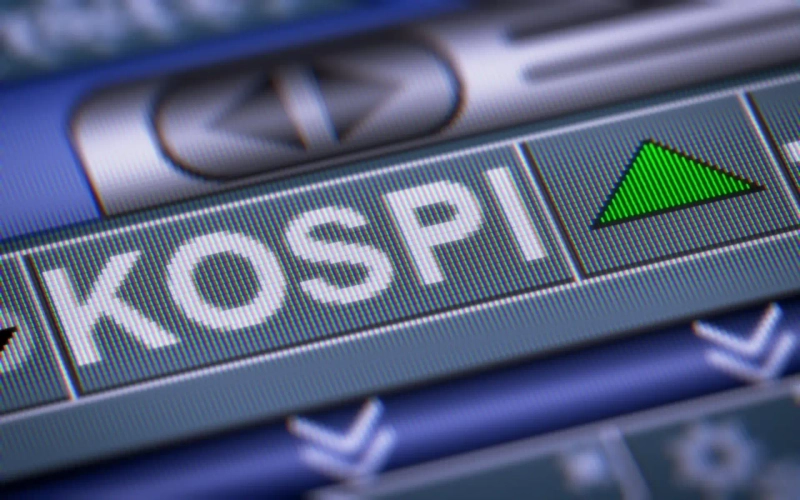
It remains to be seen whether the KOSPI index will break out of its trading range in the first week of September (Sept. 1~5). This is because policy momentum could grow again during the regular National Assembly session. In addition, employment and inflation data that could affect the U.S. policy rate decision are also scheduled to be released.
According to the Korea Exchange on the 31st, the KOSPI closed trading for August at 3186.01, up 0.55% in the last week of August. The South Korea–U.S. summit, which had been highly uncertain, concluded smoothly, and despite U.S. Federal Reserve (Fed) Chair Jerome Powell hinting at a rate cut at the Jackson Hole meeting, the index did not move significantly.
Lee Kyung-min, a researcher at Daishin Securities, diagnosed, "Since the second-quarter earnings season, the KOSPI has either been adjusting or failing to find further upward momentum."
Na Jeong-hwan, a researcher at NH Investment & Securities, said, "In the recent stock market, sector- and stock-by-stock rotation is unfolding rapidly." A rotation market usually occurs when new flows of demand and supply do not enter. Because funds within the market move between various sectors, volatility can increase at the stock and sector level, but the index often remains stagnant.
There are events this week that could provide momentum for the KOSPI to break out of the trading range. Domestically, the regular National Assembly session begins, and in the U.S., economic indicators that could affect the policy rate decision will be released. NH Investment & Securities presented an expected KOSPI band of 3000~3300 for this week.
First, attention is focused on the third amendment to the Commercial Act to be discussed at the regular National Assembly. Kang Jin-hyuk, a researcher at Shinhan Investment Corp., said, "The second amendment to the Commercial Act, which included mandatory cumulative voting and expanded separate election of audit committee members, passed the plenary session of the National Assembly early last week," and added, "In this regular session, it is necessary to watch whether the amendment to the Commercial Act including mandatory cancellation of treasury shares and discussions on tax law amendments will pass."
Na Jeong-hwan said, "With the South Korea–U.S. summit, which had concentrated the government's administrative capacity, concluded and tariff negotiations entering their final stages, domestic policy expectations may expand again," and added, "In September, as the government's pledged policies gradually become visible, policy expectations are likely to expand again."
Attention is also focused on U.S. August employment and inflation data, because they could have a major impact on the policy rate decision at the U.S. Federal Reserve's September Federal Open Market Committee (FOMC) regular meeting, which concludes on the 17th (local time) next month.
Lee Kyung-min analyzed, "It is inevitable that there will be diverse interpretations regarding the U.S. August nonfarm payroll report to be released on the 5th next month, with some expecting a U.S. policy rate cut while others worry about a recession."
Na Jeong-hwan advised, "Given that July and August are seasonally weak for employment, the employment data may have been compiled in a way that supports a U.S. policy rate cut," and added, "In the second half of the year, as expectations of a Fed rate cut increase, attention should be paid to growth stocks such as AI software and the bio sector."
Prior to that, on the 2nd and 4th of next month the U.S. manufacturing and services Purchasing Managers' Indexes (PMIs) will be announced, respectively. They are survey results asking firms about the U.S. economic situation, inflation, employment, and business outlook. They are expected to reflect the impact of the tariff policies pushed by U.S. President Donald Trump.
Lee Kyung-min said, "The KOSPI's 12-month forward price-earnings ratio (PER) is currently 10.65 times, slightly above the recent 3-year average (10.26 times), indicating that the overheated phase has eased," and suggested, "In next week's market tug-of-war, if the KOSPI falls below 3100, it may be worth increasing equity exposure."
Han Gyeong-woo Hankyung.com reporter case@hankyung.com

![[New York Stock Market Briefing] Closed lower on AI concerns… Broadcom plunged in the 5% range](https://media.bloomingbit.io/PROD/news/b07399a5-fad3-4406-971e-042ab70ad61d.webp?w=250)