Editor's PiCK
Expectations for President Lee's campaign promises… 6 out of 10 say "We will increase digital asset investment"
Summary
- 57.9% of respondents stated that they will expand their investment in digital assets in the future.
- The main reasons for expanding investment included 'prospect for regulatory improvement' and expectations for policies such as the allowance of spot ETFs for virtual assets.
- The enactment of the Digital Asset Basic Act and related institutional improvements were identified as key policy agendas for the development of the market.
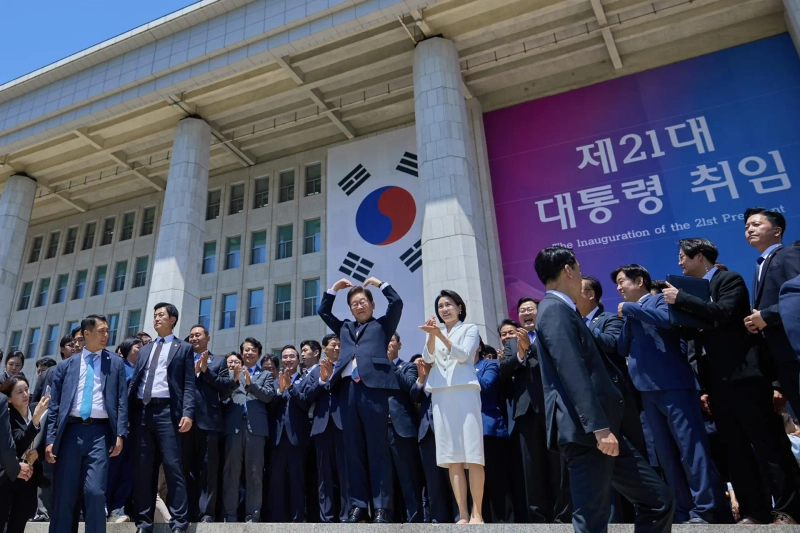
As there are expectations that President Lee Jae-myung will promote the digital asset ecosystem, a survey has shown that investors also plan to increase their investments in digital assets.
According to the industry on the 9th, the Korea Chamber of Commerce and Industry (KCCI) conducted a survey through 'Sofl' on 2,259 citizens regarding 'National Perception of the Digital Asset Market.' According to the results, 57.9% of respondents answered that they would expand their investment in digital assets such as virtual assets (cryptocurrencies) in the future. This was followed by responses that 27.6% would 'maintain the current level,' and 14.5% would 'reduce their investment.'
The most common reason for expanding digital asset investment was the 'prospect for regulatory improvement' (28.6%). Other reasons included 'U.S. government's pro-virtual asset policy' (22.6%), 'domestic virtual asset taxation deferral' (20.4%), 'poor returns on existing holdings' (17.5%), and 'lack of suitable investment destinations' (10.4%). KCCI explained, "It seems that expectations that the new government's legislation of a digital asset basic act and allowance of spot ETFs for virtual assets will soon become a reality are being reflected."
78.2% of respondents answered that 'the digital asset market can contribute to national economic development.' As factors contributing to the economy, 'fostering new industries such as blockchain and job creation' (28.2%), 'promoting digital financial innovation' (24.6%), 'resolving real estate concentration in the asset market' (20.4%), 'securing financial infrastructure to respond to global trends' (12.8%), 'support for asset formation for the youth' (8.4%), and 'improved funding conditions for early-stage startups' (5.6%) were cited.
The most frequently cited policy agenda for the development of the digital asset market was 'enactment of the Digital Asset Basic Act' (26.3%), followed by 'introduction of spot ETFs for virtual assets' (20.9%), 'establishment of a regulatory framework for stablecoins' (15.6%), 'legislation for token securities (STO)' (13.6%), 'clarification of the currently deferred virtual asset taxation system' (13.0%), and 'allowing corporate and institutional investment in virtual assets' (10.5%).
Kang Seok-gu, head of the KCCI Research Division, said, "Digital assets are likely to serve as future investment and transaction means, and major countries are incorporating them into the institutional system by improving regulatory frameworks." He added, "Korea should also establish institutional foundations for policies such as the enactment of the Digital Asset Basic Act, spot ETFs for virtual assets, and stablecoins to respond to changes in the global financial environment and use them as drivers for economic growth."

Uk Jin
wook9629@bloomingbit.ioH3LLO, World! I am Uk Jin.